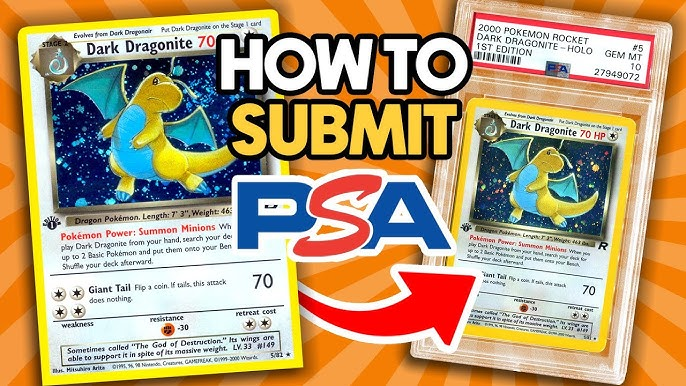
how to submit with PSA Grading
Introduction
Pokémon card collecting has grown massively in recent years, and many collectors are now focused on protecting and increasing the value of their cards. One of the best ways to do this is through professional card grading.
If you’re wondering how to grade Pokémon cards, the process involves sending your card to a grading company that evaluates its condition and assigns it a score. The card is then sealed inside a protective case that confirms its authenticity and grade.
Graded cards often sell for significantly more than ungraded cards, especially when they receive high scores. Among grading companies, PSA (Professional Sports Authenticator) is widely considered the most trusted and recognized.
This guide will explain how Pokémon card grading works, how to submit cards to PSA, grading costs, and how PSA compares to other grading companies.
What Does It Mean to Grade Pokemon Cards?
Card grading is the process of having a professional company inspect a trading card and assign it a condition score from 1 to 10. After grading, the card is sealed inside a plastic case called a slab that protects it from damage.
Professional graders evaluate four key areas:
Centering
Centering refers to how evenly the artwork is aligned on the card. If the borders are uneven, the grade may be lower.
Corners
Sharp corners are essential for high grades. Any whitening or bending will reduce the score.
Edges
Edges are checked for wear, chipping, or damage.
Surface
The surface is inspected for scratches, dents, stains, or print lines.
These factors determine the final grade.
PSA Grading Scale
PSA uses a grading scale from 1 (Poor) to 10 (Gem Mint).
Common grades include:
- PSA 10 – Gem Mint: Nearly perfect condition
- PSA 9 – Mint: Minor flaws visible under inspection
- PSA 8 – Near Mint-Mint: Slight wear but still excellent
A PSA 10 is the most desirable grade and usually sells for the highest price.
Why PSA Is the Most Popular Grading Company
PSA is considered the industry leader in trading card grading, especially in the Pokémon card market.
Collectors often prefer PSA for several reasons.
Higher resale value
PSA graded cards often sell for more because buyers trust the company’s reputation.
Recognized grading system
The PSA 1–10 grading scale has become the most widely accepted grading standard.
Population reports
PSA keeps a database showing how many copies of a card exist at each grade level. This helps collectors understand rarity.
Because of this strong market trust, PSA is usually the best option for collectors who want to maximize card value.
How to Grade Pokemon Cards with PSA (Step-by-Step)

Submitting cards to PSA is fairly simple once you understand the process.
Step 1: Decide If Your Card Is Worth Grading
Not every card should be graded. Before submitting a card, consider:
- The rarity of the card
- The condition of the card
- The potential resale value if graded
Research recent sales of graded versions of your card to determine if grading is worth the cost.
Step 2: Review PSA Grading Standards
Understanding PSA grading standards helps you estimate the possible grade.
For example, a PSA 10 card must have nearly perfect centering, sharp corners, and a clean surface. Even small flaws such as whitening on the edges can drop a card to PSA 9.
Carefully inspect your card under good lighting before submitting it.
Step 3: Create a PSA Account
To submit cards, you will need to create an account on the PSA website.
PSA offers free accounts, but collectors who submit cards regularly may choose a paid membership for additional benefits.
Step 4: Choose a Service Level
PSA offers different grading tiers depending on the declared value of the card and how quickly you want it graded.
Typical options include:
- Value tier for lower-value cards
- Regular service for standard submissions
- Express service for high-value cards
Faster services cost more but have shorter turnaround times.
Step 5: Prepare and Package Your Cards
Proper packaging is essential to prevent damage during shipping.
Most collectors use:
- Penny sleeves
- Semi-rigid holders (Card Savers)
Place each card inside a penny sleeve, then insert it into a semi-rigid holder. Avoid using regular top loaders because PSA prefers semi-rigid holders for easier removal.
Once the cards are prepared, package them securely with cardboard protection and include your submission form.
Step 6: Ship and Track Your Submission
After shipping your cards to PSA, the grading process begins.
The typical process includes:
- PSA receives the package
- Cards are entered into the system
- Professional graders evaluate each card
- Cards are sealed in PSA slabs
- The graded cards are returned to you
You can track your order status through your PSA account.
Pokemon Card Grading Cost
Many collectors ask about Pokémon card grading cost before submitting cards.
PSA pricing depends on the service level and card value.
Typical costs include:
- Value tier: around $15–$25 per card
- Regular service: around $50 per card
- Express service: $100 or more per card
Additional costs may include shipping, insurance, and optional PSA membership fees.
Grading is usually worth it when the graded value of the card will be significantly higher than the grading fee.
How Long Does PSA Grading Take?
Grading turnaround times vary depending on demand and service level.
Estimated timelines include:
- Value submissions: several weeks to a few months
- Regular service: a few weeks
- Express service: days to weeks
During busy periods, grading times may increase.
PSA vs Other Grading Companies

PSA VS Beckett CGC
Although PSA is the most popular grading company, two other major companies are also used by collectors: Beckett Grading Services (BGS) and CGC (Certified Guaranty Company).
PSA vs Beckett (BGS)
Beckett grading includes subgrades, which score the card in four separate areas: centering, corners, edges, and surface.
Beckett also offers the rare Black Label 10, which indicates a perfect card. However, PSA graded Pokémon cards often sell for higher prices in the market.
PSA vs CGC
CGC has become increasingly popular in the trading card industry.
Some benefits of CGC include lower grading costs and a unique slab design. However, PSA still tends to have stronger demand in the Pokémon market.
What Cards Should You Grade?

Pokemon Cards
Certain types of cards are better candidates for grading.
These include:
Vintage cards
Older cards from early Pokémon sets can gain significant value when graded.
First Edition cards
First Edition prints are highly collectible.
Shadowless cards
Early print versions of Base Set cards are especially valuable.
Modern chase cards
Rare pulls from newer sets can also benefit from grading.
Near-perfect condition cards
Cards that appear mint or better are the best grading candidates.
Common Grading Mistakes to Avoid
Many beginners make mistakes when submitting cards for grading.
Common errors include:
Ignoring centering issues
Even small centering problems can lower the grade.
Poor packaging
Improper shipping can damage cards before they reach the grading company.
Grading low-value cards
Grading fees may exceed the value of the card.
Inspecting your cards carefully can help avoid these mistakes.
Is Grading Pokemon Cards Worth It?
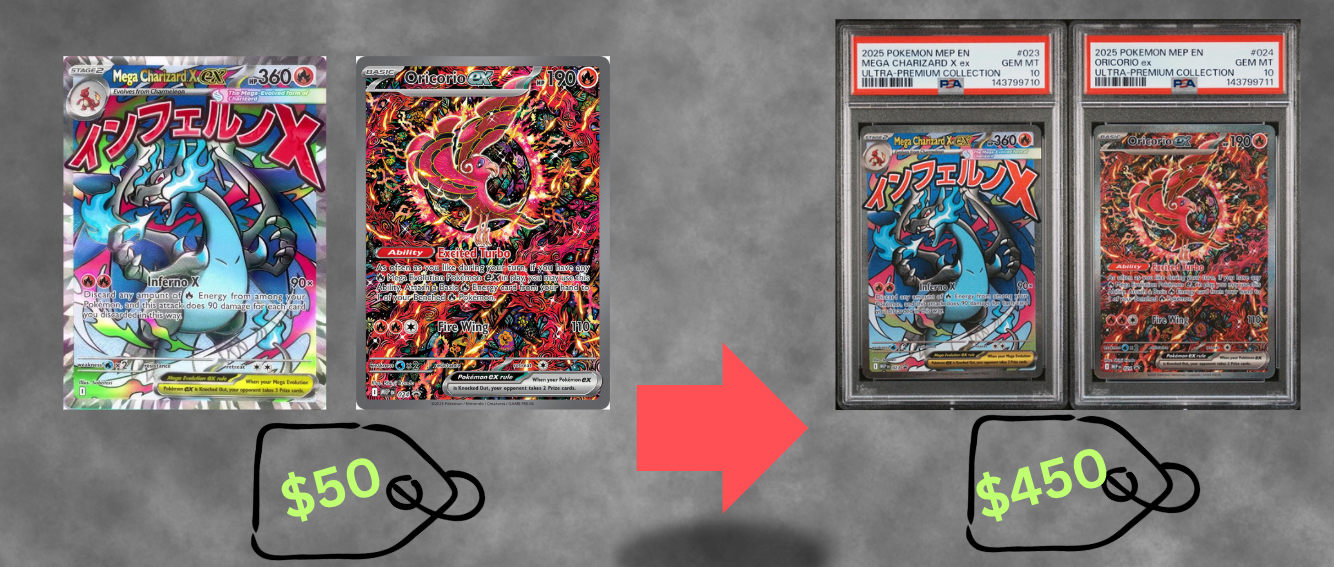
The price compared to raw and graded cards.
Grading Pokémon cards can increase value and provide long-term protection for your collection.
It is usually worth grading when:
- The card is rare or highly collectible
- The card is in excellent condition
- The graded value will exceed grading costs
However, grading may not be worthwhile for common or heavily worn cards.
Some collectors grade cards for investment purposes, while others simply want to protect and display their favorite cards.
Start Grading
Understanding how to grade Pokémon cards is an important step for collectors who want to protect their cards and increase their value.
Grading companies evaluate a card’s condition, assign a score, and seal it in a protective case. Among grading companies, PSA remains the most trusted and widely recognized option in the Pokémon card market.
By understanding the grading process, costs, and grading standards, collectors can decide which cards are worth submitting.
Ready to grade your Pokémon cards? Start preparing your best cards for PSA submission and begin maximizing the value of your collection today.