Why Are Pokémon Cards So Expensive? The Complete 2025 Guide
Published April 22, 2025 | Category: Pokémon & TCG | 8 min read
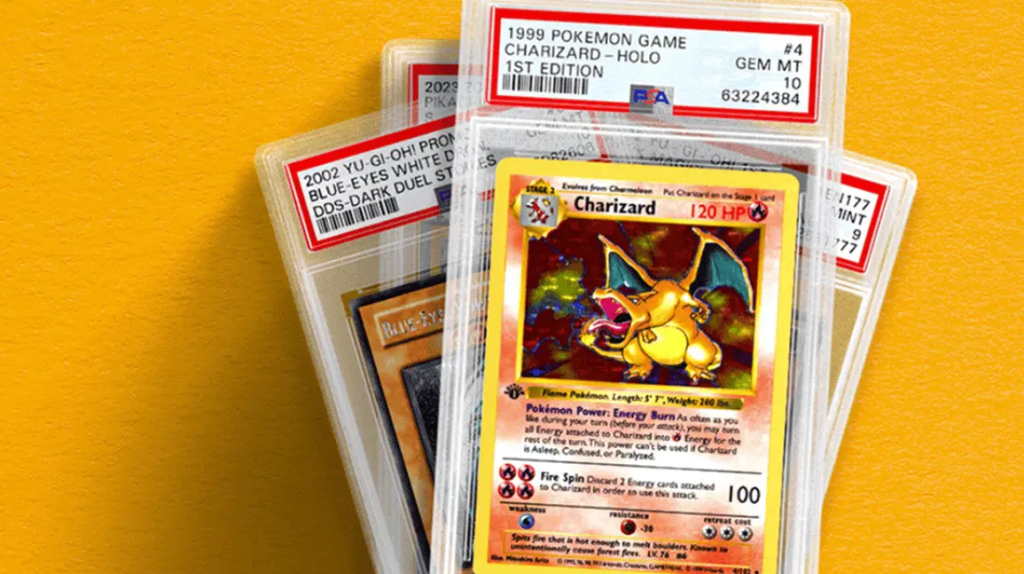
Quick Answer: Pokémon cards are so expensive because of a perfect storm of limited print runs, surging nostalgia-driven demand, speculator investment, influencer hype, card grading culture, and the genuine scarcity of rare cards. Read on for the full breakdown.
You walk into Target, spot a Pokémon booster pack, and do a double-take at the price tag. Or maybe you checked eBay for a card you remember pulling as a kid and nearly fell off your chair. If you’ve ever wondered why are Pokémon cards so expensive, you’re not alone — it’s one of the most-searched questions in the hobby right now.
The Pokémon Trading Card Game has been around since 1996, but prices have climbed to levels that would have seemed unbelievable even a decade ago. A first-edition holographic Charizard can fetch tens of thousands of dollars. Even modern booster boxes regularly sell out at retail and get flipped online for double the price. What’s going on?
In this guide, we break down every major reason why Pokémon cards are so expensive in 2025 — from the economics of rarity and print runs to the cultural forces driving demand. Whether you’re a parent trying to understand the craze, a returning collector, or someone thinking about investing, this article has you covered. Browse Our Pokémon Card Collection
1. Supply and Demand: The Root Cause
At its core, the reason Pokémon cards are so expensive is classic economics: limited supply colliding with massive demand. The Pokémon Company releases cards in sets, and each set has a fixed print run. When demand outpaces what’s been printed, prices climb on the secondary market.
During 2020 and 2021, the COVID-19 pandemic created the perfect conditions for a card-price explosion. People were stuck at home, stimulus money was available, and nostalgia was at an all-time high. Pokémon products sold out almost instantly, and resellers began marking products up by 200–400% online. While the market cooled somewhat in 2022–2023, demand has held strong — and prices for desirable cards have never returned to pre-pandemic levels.
The Pokémon Company has since ramped up print runs to try to meet demand, but the secondary market for vintage and rare cards remains red-hot. New collectors enter the hobby every day, and each one increases the competition for a fixed pool of cards.
2. Rarity Tiers: Not All Cards Are Created Equal
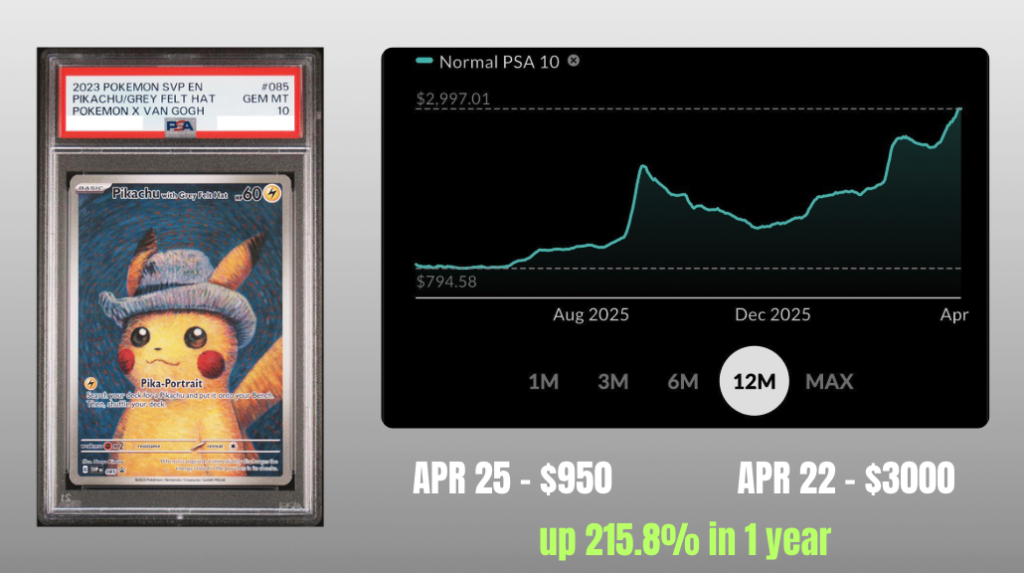
One of the biggest reasons Pokémon cards are so expensive is the deliberate rarity system built into every set. The Pokémon Company designs each set with multiple rarity levels, and the rarest cards can appear as infrequently as once per every 50–200 booster packs.
| Rarity Symbol | Card Type | Typical Pull Rate | Typical Price Range |
|---|---|---|---|
| ◆ Common | Standard artwork | Every pack | $0.10–$1 |
| ◆◆ Uncommon | Holographic or rare | 1–2 per pack | $0.50–$5 |
| ★ Rare Holo | Full-art holo | ~1 per pack | $5–$30 |
| ★★ Ultra Rare / EX / VMAX | Full-art promo-style | ~1 per 4–8 packs | $20–$200+ |
| ★★★ Secret Rare / Illustration Rare | Alternate-art, rainbow | ~1 per 15–80 packs | $50–$500+ |
| Special / Promo / 1st Edition | Limited release | Event or era-specific | $100–$100,000+ |
The rarest modern cards — like Illustration Rares (IIR) and Special Illustration Rares (SIR) — feature stunning, artist-driven artwork that has taken the collecting world by storm. Because they look like little paintings rather than trading cards, they’ve attracted a whole new audience of art collectors who push prices even higher.
3. Card Grading and the PSA Effect
Card grading companies like PSA (Professional Sports Authenticator) and Beckett have played a massive role in making Pokémon cards expensive. Grading involves sending a card to a professional service, which evaluates its condition and seals it in a tamper-proof case with a numerical grade from 1 to 10.
A PSA 10 (Gem Mint) grade can increase a card’s value by 500–1,000% over an ungraded copy. Because most cards come out of packs with minor centering issues, edge wear, or print defects, true PSA 10 copies are genuinely scarce — even for cards that were printed in the millions. This artificial scarcity within an already scarce product creates another layer of price pressure.
Real Example: A raw (ungraded) holographic first-edition Charizard might sell for $5,000–$10,000. The same card graded PSA 10 has sold at auction for over $300,000.
Grading also added legitimacy to the hobby, attracting serious investors who view high-grade cards as alternative assets similar to fine art or rare coins. This investor class doesn’t care about playing the game — they’re treating cards as financial instruments, which keeps high-end prices elevated. Learn How to Get Your Cards Graded
4. Nostalgia: The Emotional Price Tag
Pokémon launched in the United States in 1998, which means the kids who grew up with it are now adults in their late 20s and 30s — with disposable income and a powerful emotional connection to the franchise. This nostalgia is one of the most underestimated reasons Pokémon cards are so expensive.
Many collectors aren’t buying cards to play the game. They’re buying back pieces of their childhood. Charizard, Mewtwo, Blastoise, and Pikachu aren’t just characters — they’re emotional anchors that people are willing to pay a significant premium to own.
This nostalgia effect is compounded by generational handoff: parents who collected in the ’90s are now introducing their children to Pokémon, creating multi-generational demand for both vintage and modern cards simultaneously. That’s an incredibly unusual dynamic in the collectibles market.
5. Influencers, YouTube, and Social Media Hype
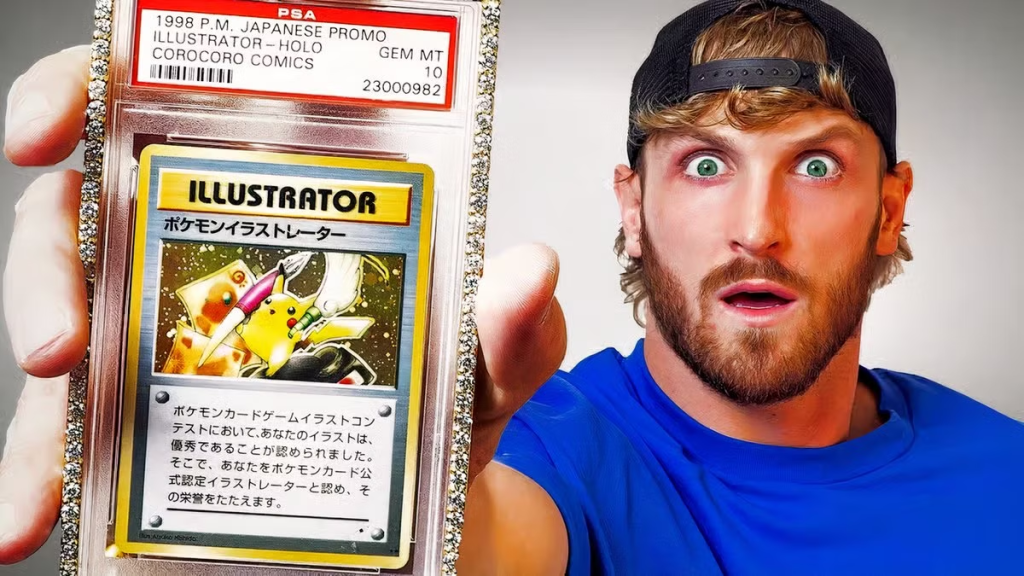
In 2020, a handful of high-profile moments fundamentally changed the Pokémon card market. YouTubers like Logan Paul began opening vintage booster packs on camera, attracting millions of viewers who had never thought about Pokémon cards. When Logan Paul wore a $150,000 PSA 10 first-edition Charizard to a boxing match, it became global news overnight.
Social media amplified this effect enormously. Pack-opening videos are among the most-watched content on YouTube and TikTok — the thrill of the “pull” is genuinely exciting to watch, and it drives viewers to buy their own packs. Each viral moment — whether it’s a record-breaking auction sale or a surprise rare pull — sends a fresh wave of buyers into the market, pushing up prices on everything from booster packs to vintage singles.
The Pokémon Company itself responded with major marketing pushes around the franchise’s 25th anniversary in 2021, including limited-edition products and celebrity collaborations that further fueled the frenzy and reinforced why Pokémon cards are so expensive.
6. Speculation and Scalping
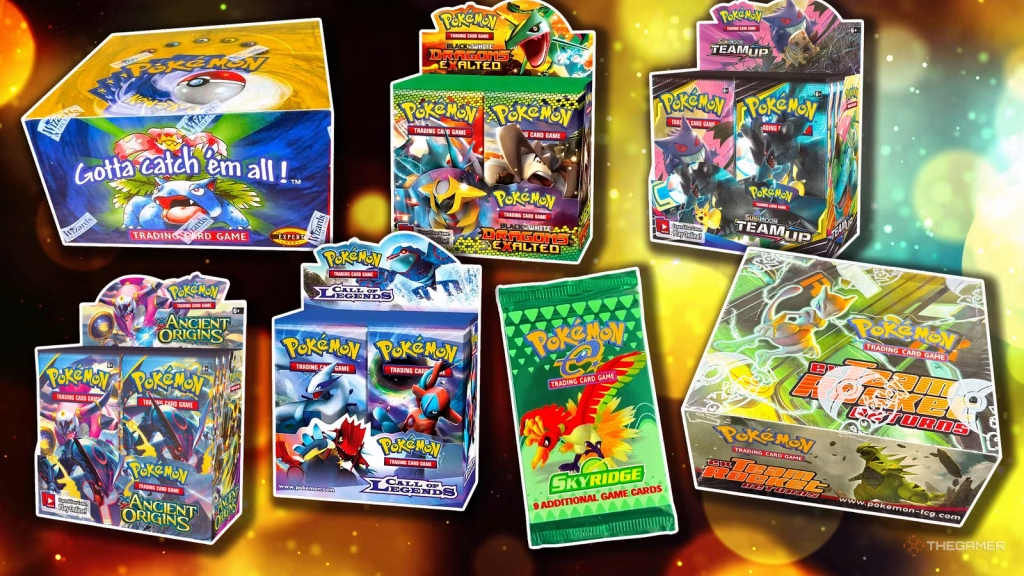
A significant portion of the Pokémon card market is now driven not by collectors or players, but by speculators. Just like cryptocurrency or NFTs, Pokémon cards attracted investors who saw the potential for quick profits. Entire sealed booster boxes are purchased from retail stores and flipped online at markups of 50–300%.
Some buyers treat sealed booster boxes as long-term investments, holding them in climate-controlled storage and expecting values to appreciate over decades — just as sealed vintage product has historically done. A sealed 1st Edition Base Set booster box, for example, has sold for over $400,000 at auction.
Tip for Buyers: If you want to collect without overpaying, focus on buying singles (individual cards) rather than packs or boxes. Singles are always cheaper per-card than gambling on pack pulls.
7. Production Costs and Set Complexity
Modern Pokémon sets are significantly more complex and expensive to produce than early ones. Today’s sets feature foil treatments, full-art illustrations commissioned from multiple professional artists, specialty printing techniques like etched holofoil and rainbow foil, and multilingual production for global simultaneous release.
These production costs are partially reflected in retail prices — a booster pack now retails for around $5–$6, compared to $3.29 in 1999. But the bigger story is how production complexity drives scarcity at the top end: specialty cards require more printing passes, more quality control, and lower yields, naturally resulting in fewer high-grade copies reaching collectors. Most IMPORTANT sets
8. The Most Expensive Pokémon Cards Ever Sold
To truly understand why Pokémon cards are so expensive, it helps to look at the record-breaking end of the market. These sales aren’t flukes — they reflect the serious collector demand that underpins the entire ecosystem.
9. Will Pokémon Card Prices Go Down?
This is the question everyone wants answered. The honest truth: it depends on the card. Modern bulk and common cards will always be cheap and accessible. But premium cards — high-grade vintage cards, low-pull-rate illustration rares, and sealed vintage product — are unlikely to see significant price drops because the collector base is large and growing globally.
The Pokémon franchise itself shows no signs of slowing down. With new games, anime seasons, and merchandise constantly expanding the audience, each new generation of fans becomes a potential future collector. As long as the brand remains culturally relevant — and at nearly 30 years old, it shows every sign of staying that way — the cards that drive it will hold their value.
How to Collect Pokémon Cards Without Breaking the Bank
Here are practical strategies to enjoy the hobby even when Pokémon cards are so expensive:
- Buy singles, not packs. Find the specific card you want on TCGPlayer or eBay rather than gambling on packs.
- Focus on sets you love. Don’t chase every new release. Pick the sets or Pokémon that genuinely excite you.
- Buy near-mint ungraded. PSA-graded cards carry a significant premium. Near-mint raw copies are much more affordable and look just as good in a binder.
- Set a budget and stick to it. It’s easy to overspend. Decide your monthly budget before browsing.
- Join trading communities. Local card shops, Facebook groups, and Reddit communities like r/pkmntcgtrades can help you find deals and trade duplicates.
Frequently Asked Questions
Why are Pokémon cards so expensive right now in 2025?
Pokémon cards remain expensive in 2025 due to sustained collector demand, the ongoing popularity of the franchise, a growing global collector base, card grading culture driving premium prices, and limited-availability rare cards with low pull rates in modern sets.
What makes a Pokémon card valuable?
The main value factors are: rarity (pull rate), condition (graded copies are worth more), the specific Pokémon featured (fan-favorites like Charizard command higher prices), whether it’s from the 1st Edition Base Set, and artwork quality for modern Illustration Rare cards.
Are cheap Pokémon cards still available?
Yes! Common and uncommon singles can be purchased for as little as $0.10–$2.00 each from card shops and online marketplaces. Most cards in any given set are not expensive — only the top-tier rares drive the average price perception upward.
Should I invest in Pokémon cards?
Sealed vintage product and high-grade rare cards have historically appreciated significantly, but past performance doesn’t guarantee future returns. Never invest more than you’d be comfortable losing, and never buy sealed product expecting guaranteed profits. Collect what you love first.
Which Pokémon cards are the most expensive?
The most expensive Pokémon cards are the Pikachu Illustrator card (sold for $5.2 million), 1st Edition Base Set Charizard in PSA 10 condition, and sealed 1st Edition booster boxes. Among modern cards, Special Illustration Rares and high-grade pulls from popular sets like Prismatic Evolutions command the highest premiums.
Do you think Pokemon is worth it
So, why are Pokémon cards so expensive? The answer is a combination of forces that rarely align so perfectly in any other collectible market: deliberate rarity by design, decades of brand nostalgia, a passionate global community, speculator investment, card grading culture, and the ongoing cultural dominance of the Pokémon franchise.
Whether you’re a longtime fan, a new collector, or a parent trying to make sense of why a piece of cardboard costs more than your electric bill, hopefully this guide has given you the full picture. The good news: there are still plenty of ways to enjoy Pokémon cards at every budget level. Start with singles, collect what you love, and enjoy the hunt.
Have questions about Pokémon cards or want to know what your collection might be worth? We’d love to help. learn even more
Meta Description (for WordPress SEO plugin): Why are Pokémon cards so expensive in 2025? We break down every reason — rarity, grading, nostalgia, influencer hype, and more — plus tips to collect smart without overspending.