Updated May 2026 | Category: Pokémon Cards | 12 min read
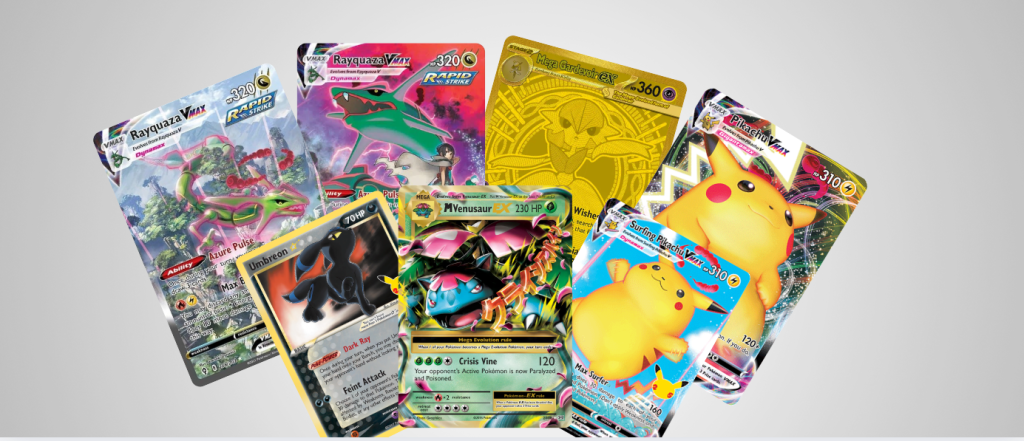
⚡ What You’ll Learn: This guide covers every step of How to Sell Pokémon Cards — from sorting and valuing your collection, to choosing the right platform, pricing for maximum profit, photographing cards like a pro, and shipping safely. Whether you have a shoebox of childhood cards or a binder full of modern chase cards, this is the guide you need.
If you’ve been sitting on a collection of Pokémon cards and wondering whether they’re worth anything — the answer might surprise you. The Pokémon card market is one of the strongest it has ever been in 2026, with rare cards selling for hundreds, thousands, and in some cases millions of dollars.
But here’s the problem most sellers run into: they don’t know how to sell Pokémon cards correctly. They underprice their valuable cards, overprice their common ones, take bad photos, choose the wrong platform, and ultimately leave serious money on the table. This guide fixes all of that.
We’re going to walk through the entire process step-by-step — so by the time you finish reading, you’ll know exactly what your cards are worth, where to sell them, and how to do it in a way that maximizes your payout.
First Time Selling? Read Why Pokémon Cards Are So Valuable
Why 2026 Is a Great Time to Sell Pokémon Cards
The Pokémon TCG market has been on a remarkable run since 2020, and demand remains strong heading into 2026. A few key trends are keeping prices elevated:
- A massive global collector base that spans multiple generations — from nostalgic adults in their 30s to kids discovering the cards for the first time.
- Grading culture has legitimized the hobby as an investment vehicle, drawing in buyers who treat high-grade cards like alternative assets.
- Social media and content creators continue to fuel hype cycles around new set releases and record-breaking card sales.
- Limited print runs on premium cards keep supply tight, particularly for vintage cards from the Base Set era (1998–2003).
The bottom line: if you have cards — especially holographics, first editions, or alt-art rares from modern sets — there is a strong and active market of buyers ready to pay. Learning how to sell Pokémon cards the right way is the difference between getting fair market value and settling for a fraction of what your collection is worth.

Step 1: Sort and Identify Your Cards
Step 1 of 10
Before you can sell a single card, you need to know what you have. This step is where most sellers fail — they either skip sorting entirely and sell everything in a bulk lot at a fraction of its value, or they don’t know what they’re looking at and miss their most valuable cards entirely.
How to Sort Your Collection
Start by separating your cards into three piles:
- Potentially Valuable — holos, rares, first editions, vintage cards, full-art cards
- Bulk Commons/Uncommons — standard cards with no special features
- Damaged — heavily creased, torn, or water-damaged cards
High-Value Indicators to Look For
- ⭐ Holographic foil — shiny artwork background
- ⭐ “1st Edition” stamp — small oval on the left side of the artwork
- ⭐ Shadowless cards — Base Set cards without a drop shadow on the art box
- ⭐ Full Art / Alternate Art — artwork extends edge to edge
- ⭐ Secret Rares — card number is higher than the total set count (e.g., 206/165)
- ⭐ EX, GX, V, VMAX, VSTAR cards from modern sets
- ⭐ Fan-favorite Pokémon — Charizard, Pikachu, Mewtwo, Gengar command a premium
💡 Quick Tip: Check the bottom-right corner of every card. The rarity symbol tells you a lot: ● = Common, ◆ = Uncommon, ★ = Rare. Multiple stars or special symbols indicate ultra-rare cards worth investigating further.
Step 2: Research Your Card Values
Step 2 of 10
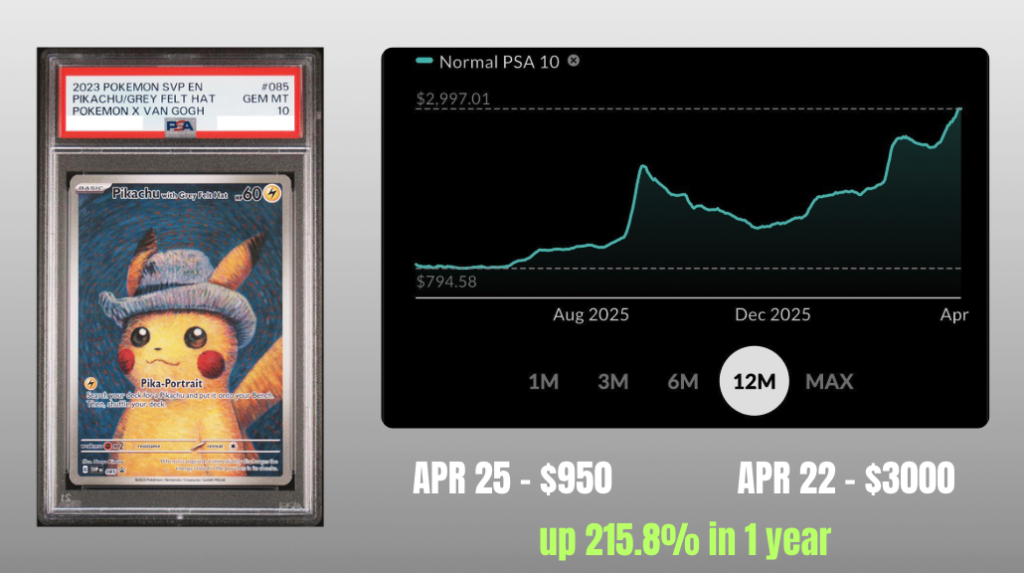
This is the most critical step in learning how to sell Pokémon cards. Getting the price wrong — in either direction — costs you real money. The good news is that checking card values is easier than ever.
The Two Best Free Pricing Tools
1. eBay Sold Listings (Most Accurate)
Go to eBay, search your card name, then filter results to “Sold” listings only. This shows you what buyers actually paid — not what sellers are asking. Asking prices mean nothing; sold prices are the market. Look at the last 30 days of sales and find the average.
2. TCGPlayer Market Price
TCGPlayer aggregates recent sales from its marketplace and shows you a “Market Price” that updates regularly. It’s especially reliable for modern cards still in active print. You can search by set, card name, and condition.
| Tool | Best For | Free? |
|---|---|---|
| eBay Sold Listings | Vintage cards, graded cards, raw rare cards | ✅ Yes |
| TCGPlayer Market Price | Modern sets, bulk commons, standard rares | ✅ Yes |
| PriceCharting | Historical price trends, vintage sealed products | ✅ Yes (basic) |
| PSA Price Guide | Graded card values by grade level | ✅ Yes |
⚠️ Warning: Never price your cards based on active eBay listings. Anyone can list a card for any price. Only use sold listings to understand real market value.
Step 3: Assess Card Condition Honestly
Step 3 of 10
Condition is the single biggest variable in how to sell Pokémon cards for maximum value. A card in Near Mint condition can be worth three to five times more than the same card in Moderately Played condition. Misrepresenting condition is also the fastest way to get negative feedback and return requests.
| Condition Grade | What It Means | Impact on Value |
|---|---|---|
| Near Mint (NM) | Almost perfect. Minor print imperfections only. No visible wear. | Full market value |
| Lightly Played (LP) | Minor scuffs or edge wear. Still looks great in a sleeve. | 70–85% of NM value |
| Moderately Played (MP) | Noticeable wear, light creases, whitening on edges. | 40–60% of NM value |
| Heavily Played (HP) | Major scratches, creases, significant whitening. | 20–35% of NM value |
| Damaged (D) | Tears, bends, water damage, writing on card. | 5–15% of NM value (or unsellable) |
Use a loupe or magnifying glass to check corners and edges carefully under bright lighting. The foil on holographic cards is particularly prone to scratching that’s only visible at certain angles.
Step 4: Should You Get Your Cards Graded?
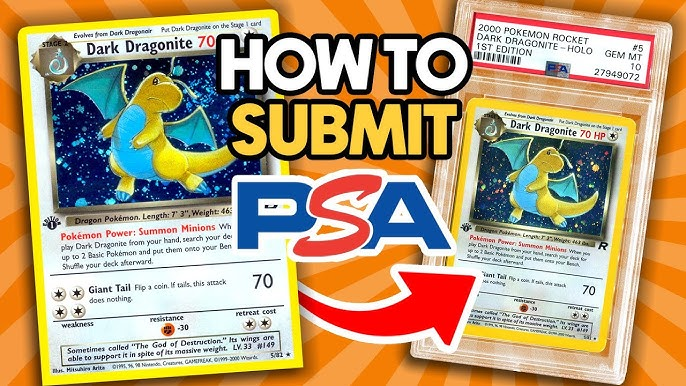
Read Our Full Guide: How to Get Your Pokémon Cards Graded
Step 4 of 10
Grading involves sending your card to a third-party authentication company that verifies the card’s authenticity, evaluates its condition on a 1–10 scale, and seals it in a tamper-proof plastic case. A PSA 10 (Gem Mint) grade is considered the gold standard.
When Grading Makes Financial Sense
Grading is worth pursuing if your card checks most of these boxes:
- The raw (ungraded) card is worth $75 or more in Near Mint condition
- The card is in Near Mint or better condition
- It features a popular Pokémon (Charizard, Pikachu, Mewtwo, Umbreon)
- It’s a vintage card from Base Set, Jungle, Fossil, or Team Rocket
- It’s a modern Illustration Rare or Special Illustration Rare with stunning artwork
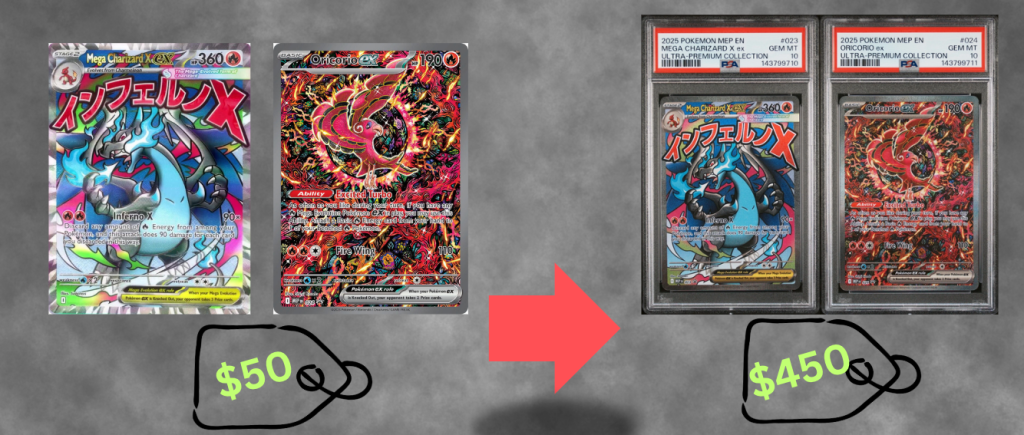
📊 Real Math: A Near Mint raw Charizard VMAX Alternate Art might sell for $200. The same card graded PSA 10 regularly sells for $600–$900. After a PSA submission fee of ~$25–$50, that’s still a $350–$650 gain just for getting it graded.
Popular Grading Companies
- PSA (Professional Sports Authenticator) — The most recognized brand. PSA 10s command the highest resale premiums. Turnaround: 2–6 months at standard tier.
- CGC (Certified Guaranty Company) — Often faster turnaround, slightly more affordable, growing reputation.
- Beckett (BGS) — Respected in the hobby, uses subgrades (centering, edges, corners, surface) to reach the final grade.
If your card is worth under $50 raw, grading fees will eat into or eliminate your profit. For budget-friendly cards, sell them raw. Read Our Full Guide: How to Get Your Pokémon Cards Graded
Step 5: Choose the Right Platform to Sell Pokémon Cards
Step 5 of 10
Where you sell matters enormously. Each platform attracts different buyers, charges different fees, and is better suited for different types of cards. Knowing which platform to use is one of the most important aspects of how to sell Pokémon cards profitably.

eBay Best for Rare & Graded Cards
Largest audience of collectors. Auction format can drive prices above market on high-demand cards. Fees: ~13% of sale price. Best for: vintage cards, graded cards, alt-art rares.
TCGPlayer Best for Modern Singles
The most active marketplace specifically for trading cards. Direct listings, established pricing guide, large buyer base. Fees: ~10.25% + payment processing. Best for: modern set singles, standard rares.
Facebook Marketplace No Fees, Local or Shipped
Great for local sales with zero fees. Also good for bulk lots. Requires more vetting of buyers. Best for: bulk commons, mid-range cards, local trades.
Local Card Shop (LCS) Fastest Cash, Lower Price
Immediate payment, no shipping, no hassle. Shops typically pay 40–60% of market value to maintain their margin. Best for: selling quickly, bulk collections.
Buyback Sites (JustCollect, etc.) Easiest Option
Send your collection, receive an offer. Convenient but expect offers below market value. Best for: large collections where convenience matters more than max profit.
Quick Platform Decision Guide
| Card Type | Recommended Platform |
|---|---|
| Graded PSA/CGC card ($100+) | eBay (Auction) |
| Raw rare card ($20–$200) | eBay or TCGPlayer |
| Modern singles ($1–$20) | TCGPlayer |
| Bulk commons (under $1 each) | Facebook Marketplace or Local Shop |
| Full collection / bulk lot | Facebook, Local Shop, or Buyback Service |
Step 6: Take Photos That Actually Sell
Step 6 of 10
Bad photos kill sales. In a competitive marketplace, buyers scroll past listings with dark, blurry, or unhelpful images. Your photos are your storefront — and for expensive cards, buyers will not purchase without being able to see every detail clearly.
What You Need (No Expensive Equipment Required)
- A smartphone with a decent camera (any modern iPhone or Android works fine)
- Natural daylight or a ring light / desk lamp
- A clean, plain background (white paper or gray felt works great)
- A penny sleeve and top loader to keep the card flat
What Photos to Include in Every Listing
- Full card front — straight-on, well-lit
- Full card back — buyers want to verify authenticity
- Close-up of corners and edges — shows wear (or lack thereof) honestly
- Close-up of the foil/holo — at a slight angle to show reflectivity
- Any visible flaws — photograph these. Transparency prevents disputes.
💡 Pro Tip: Photograph holographic cards at multiple angles. The foil catches light differently at various tilts and genuinely helps buyers understand what they’re getting. It also demonstrates you know what you’re selling — which builds buyer trust.
Step 7: Write Listings That Convert
Step 7 of 10
Your listing title is the single most important piece of copy you’ll write. It determines whether buyers find your card in search results, and whether they click on your listing versus a competitor’s.
Anatomy of a Strong Listing Title
Include these elements in order:
- Pokémon name
- Card number and set name
- Card type (Holo, Alt Art, Illustration Rare, etc.)
- Condition
- Additional keywords (Vintage, 1st Edition, PSA, etc.)
✅ Strong Title Example:
“Charizard 4/102 Base Set Unlimited Holo Rare Near Mint – Vintage Pokémon Card”
❌ Weak Title Example:
“Old Pokémon card Charizard”
Description Best Practices
- State the card name, set, condition, and any notable features upfront
- Mention any visible flaws honestly — buyers respect this and it prevents disputes
- Include your shipping timeline and packaging method
- Note whether the card is raw or graded, and the grading company/grade if applicable
- Offer to answer questions — buyers who feel comfortable asking are more likely to buy
Step 8: Price Your Cards Strategically
Step 8 of 10
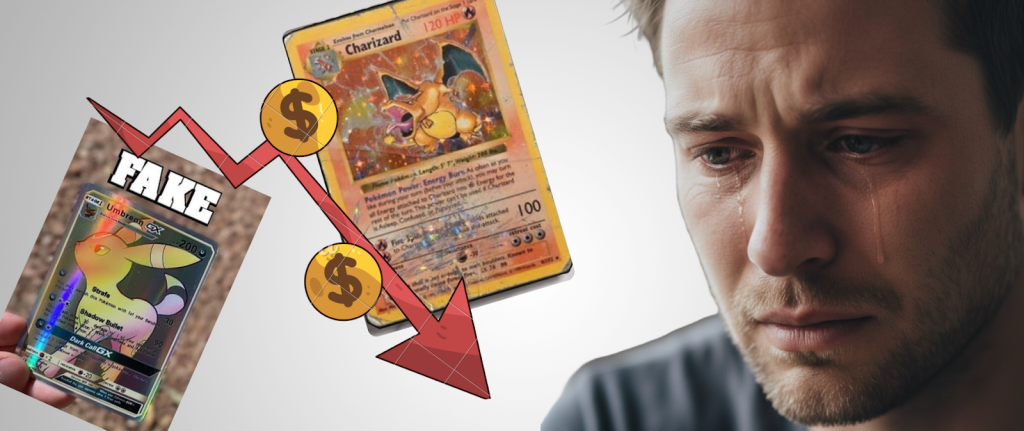
Pricing is where many sellers either leave money on the table or sit on unsold inventory for months. The goal of smart pricing is to sell at or near market value as quickly as possible — not to hope someone pays an inflated price.
Fixed Price vs. Auction
Use Fixed Price (Buy It Now) when:
- The card has a stable, well-documented market price
- You want a predictable payout
- The card is not a hyped or trending item
Use Auction when:
- The card is trending or in high demand right now
- It’s a graded card with strong collector appeal
- You’re selling a card that doesn’t have many recent comps — letting the market set the price
💡 Pricing Formula: Find the average of the last 5–10 eBay sold listings for your card in comparable condition. Start your fixed price 5–10% below that average for faster sales, or match it if you’re patient. For auctions, start at $0.99 only on high-demand cards where bidding competition is nearly guaranteed. See Our List of the Most Valuable Pokémon Cards Right Now
Step 9: Ship Cards Safely Every Time
Step 9 of 10
A card that arrives damaged means a refund, a return, a negative review — and a stressful experience for everyone involved. Proper packaging is non-negotiable, and it takes less than two minutes to do it right.
Standard Packaging Method (Single Card)
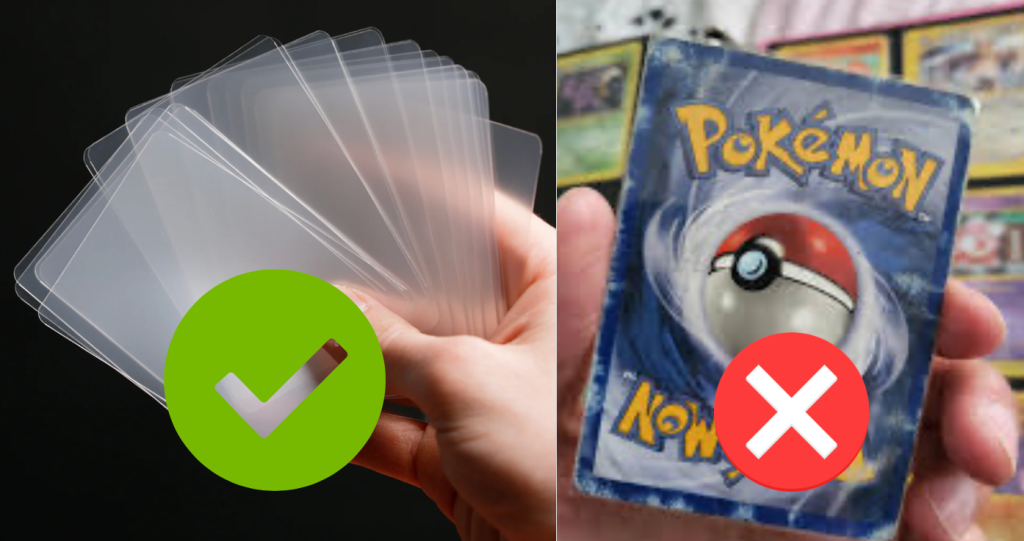
- Penny sleeve — slip the card into a soft plastic sleeve first to protect the surface
- Top loader — insert the sleeved card into a rigid plastic top loader (35pt for standard cards)
- Team bag — seal the top loader in a resealable team bag to prevent moisture
- Cardboard sandwich — place the top loader between two pieces of cardboard cut slightly larger
- Bubble mailer — seal everything inside a padded bubble mailer. Never use plain envelopes for cards worth $5 or more.
For High-Value Cards ($100+)
For expensive cards, use a rigid cardboard box rather than a bubble mailer, add a layer of bubble wrap around the top loader sandwich, and ship with tracking and signature confirmation. Consider insuring the package for the card’s full value.
⚠️ Never do this: Do not ship cards in standard white envelopes with just a sleeve. Cards folded in half, bent by mail machinery, or damaged in transit are your responsibility until they arrive safely.
Step 10: Avoid These Common Selling Mistakes
Step 10 of 10
Even sellers who know the basics of how to sell Pokémon cards make these mistakes regularly. Avoiding them can mean hundreds — or thousands — of extra dollars in your pocket.
| Mistake | Why It Costs You | The Fix |
|---|---|---|
| Selling everything in a bulk lot | Your valuable cards get lumped with commons and sold for pennies on the dollar | Always pull out rares and sell them individually first |
| Pricing from active listings | Active listings don’t reflect reality — only sold listings do | Filter eBay to “Sold” listings only |
| Ignoring condition | Overpricing a played card frustrates buyers; underpricing NM cards loses money | Grade condition honestly before pricing |
| Taking poor photos | Buyers skip blurry listings; high-value cards need clear, detailed images | Natural light + multiple angles = more sales |
| Not considering grading | A $200 card could be a $700 card with a PSA 10 | Research grade multipliers before selling raw |
| Packaging cards poorly | Damaged arrivals = refunds, returns, bad reviews | Sleeve → top loader → team bag → bubble mailer |
| Selling too fast without research | New set releases and hype cycles affect prices weekly | Track prices for 1–2 weeks before listing expensive cards |
Frequently Asked Questions: How to Sell Pokémon Cards
What is the best place to sell Pokémon cards?
For maximum profit on valuable individual cards, eBay and TCGPlayer are the best options. eBay gives you access to the most buyers globally and is ideal for rare and graded cards. TCGPlayer is best for modern singles with established prices. For quick cash with no effort, a local card shop is the easiest option, though you’ll receive less than market value.
How do I know if my Pokémon cards are worth money?
Search for your card by name on eBay and filter to “Sold” listings. This shows actual transaction prices. If your card has holographic foil, a star rarity symbol, a number higher than the set total, or features Charizard, Pikachu, or Mewtwo, it’s worth a thorough value check. TCGPlayer is also a reliable pricing resource for modern cards.
Is it worth getting Pokémon cards graded before selling?
It depends on the card. If your raw card is worth $75 or more in Near Mint condition, grading is usually worth the investment. A PSA 10 grade can multiply a card’s value by 3–10x. For cards under $50, the grading fee typically isn’t worth it — sell them raw instead.
How much does it cost to sell Pokémon cards on eBay?
eBay charges approximately 13% of the total sale price (including shipping) as a final value fee for trading cards. TCGPlayer charges around 10.25% plus a payment processing fee. Facebook Marketplace and Reddit trades typically only involve PayPal’s 2.9% + $0.30 fee, making them cheaper for the seller.
Can I sell damaged Pokémon cards?
Yes, but at significantly reduced prices. Heavily played and damaged commons are often sold in bulk lots. Damaged vintage cards (Base Set, Jungle, Fossil) still have buyer interest due to their age, even in poor condition — just be transparent about condition and price accordingly. Some buyers specifically seek played cards for modified decks or displays.
How long does it take to sell Pokémon cards online?
Common cards listed on TCGPlayer typically sell within a few days if priced at or slightly below market. Rare and expensive cards on eBay can take days to weeks depending on buyer demand. Graded cards can take longer but often sell for significantly higher prices. Auctions for high-demand cards can sell in 7 days or less.
You Now Know How to Sell Pokémon Cards Like a Pro
Selling Pokémon cards isn’t complicated — but it does require a methodical approach. The sellers who make the most money are the ones who take the time to identify valuable cards, research accurate prices, choose the right platform, present their cards well, and package them safely.
Here’s the core process one more time:
- Sort your cards and identify potential value
- Research prices using eBay sold listings and TCGPlayer
- Assess condition honestly
- Decide whether grading makes financial sense
- Choose the right platform for each card type
- Take clear, detailed photos
- Write keyword-rich, accurate listing titles and descriptions
- Price based on actual sold data, not wishful thinking
- Package and ship securely every time
- Avoid the common mistakes that cost sellers real money
The Pokémon card market is active, global, and full of buyers ready to pay fair prices for quality cards. You now have everything you need to turn your collection into cash — the smart way. Keeping Cards? Learn How to Store Pokémon Cards Safely